The Bayonet as National Duty (1942): A Japanese Army Manual and Kenji Tomiki in Manchuria
In early 1942, as the Japanese war machine celebrated its staggering early victories, a small book appeared that tells us a great deal about how martial arts were taught, standardised, and propagated in wartime Japan — and, unexpectedly, about the roots of Tomiki Aikido.
The manual
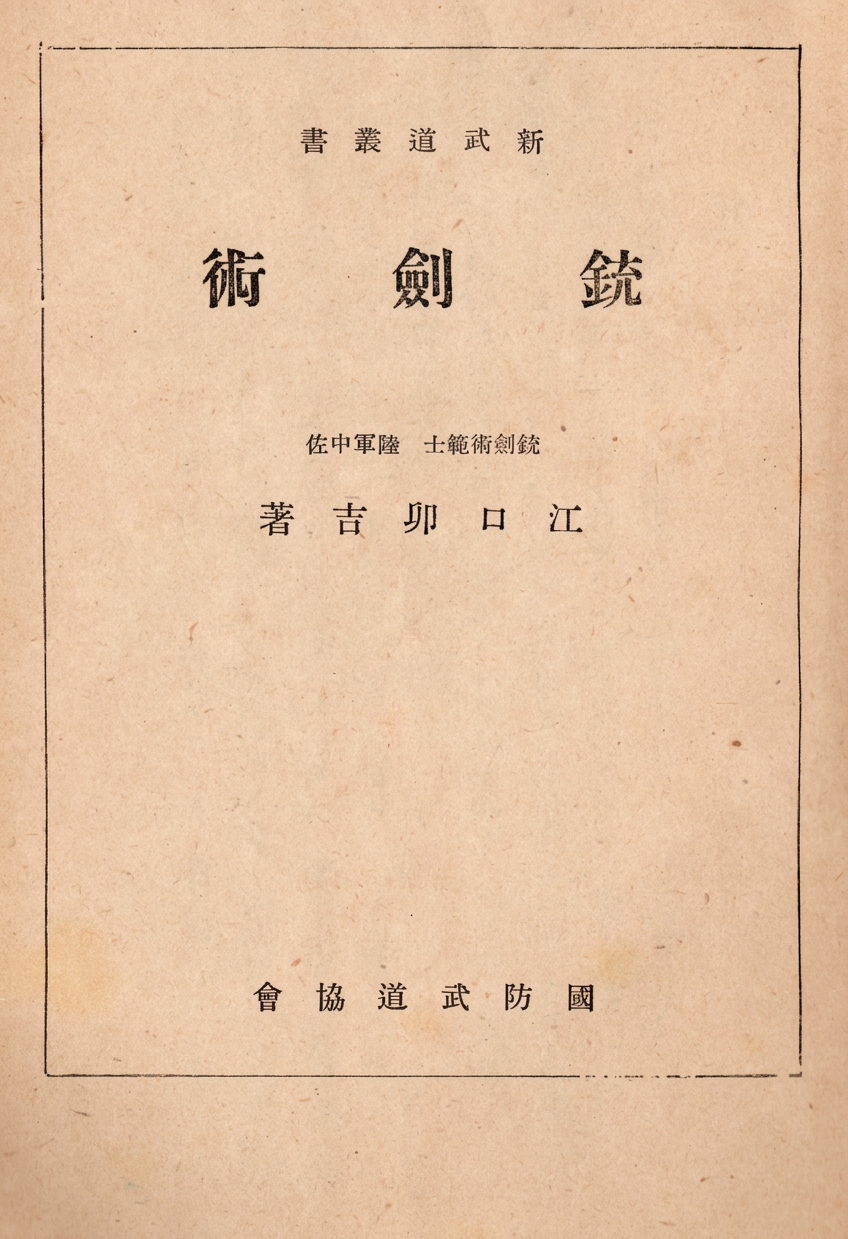
The document is an OCR scan of a Japanese manual titled 銃剣道 (jūkendō, the way of the bayonet), written by Eguchi, an instructor of the Army Toyama School, the institution where the Imperial Army shaped its sword and bayonet curriculum. It appeared in February 1942 (Shōwa 17) with two military prefaces: one by General Inoue Kikutarō, president of the Greater Japan Jūkendō Promotion Society (dated 11 February — Kigensetsu, the national founding day, hardly a coincidence), and one by Major General Itō Seiji (31 January).
The core claim is simple and of its time: however modern weapons become, battles are decided in close combat (白兵戦, hakuhei-sen), and the bayonet is its heart. Though the bayonet is not an indigenous Japanese weapon, the technique had, through combat experience, been perfected into a genuinely Japanese sword art rooted in “thousands of years of Japanese budō tradition.” Accordingly, the Ministry of Education had made bayonet training compulsory in youth schools, and the Ministry of Welfare added it to its new national defence proficiency tests. Jūkendō was to be a martial art of the entire nation.
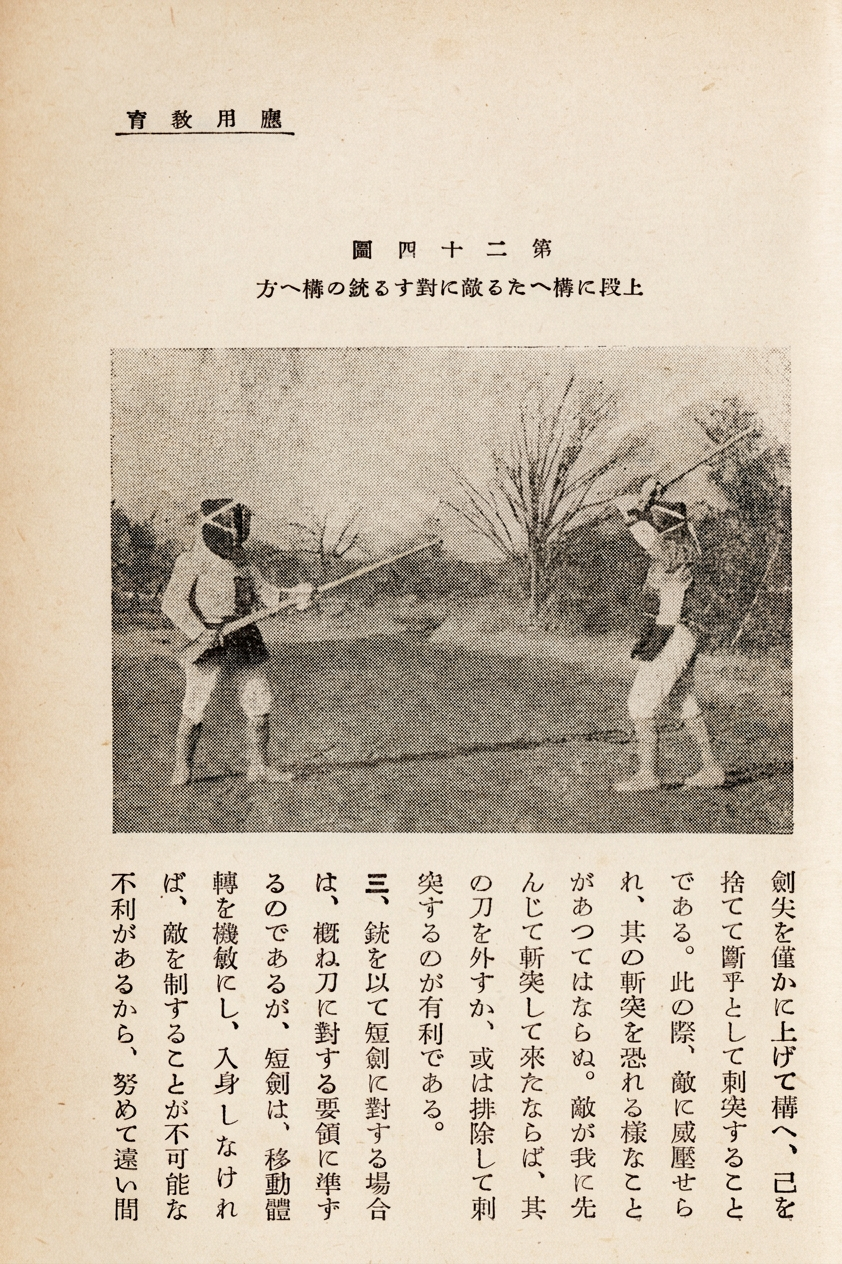
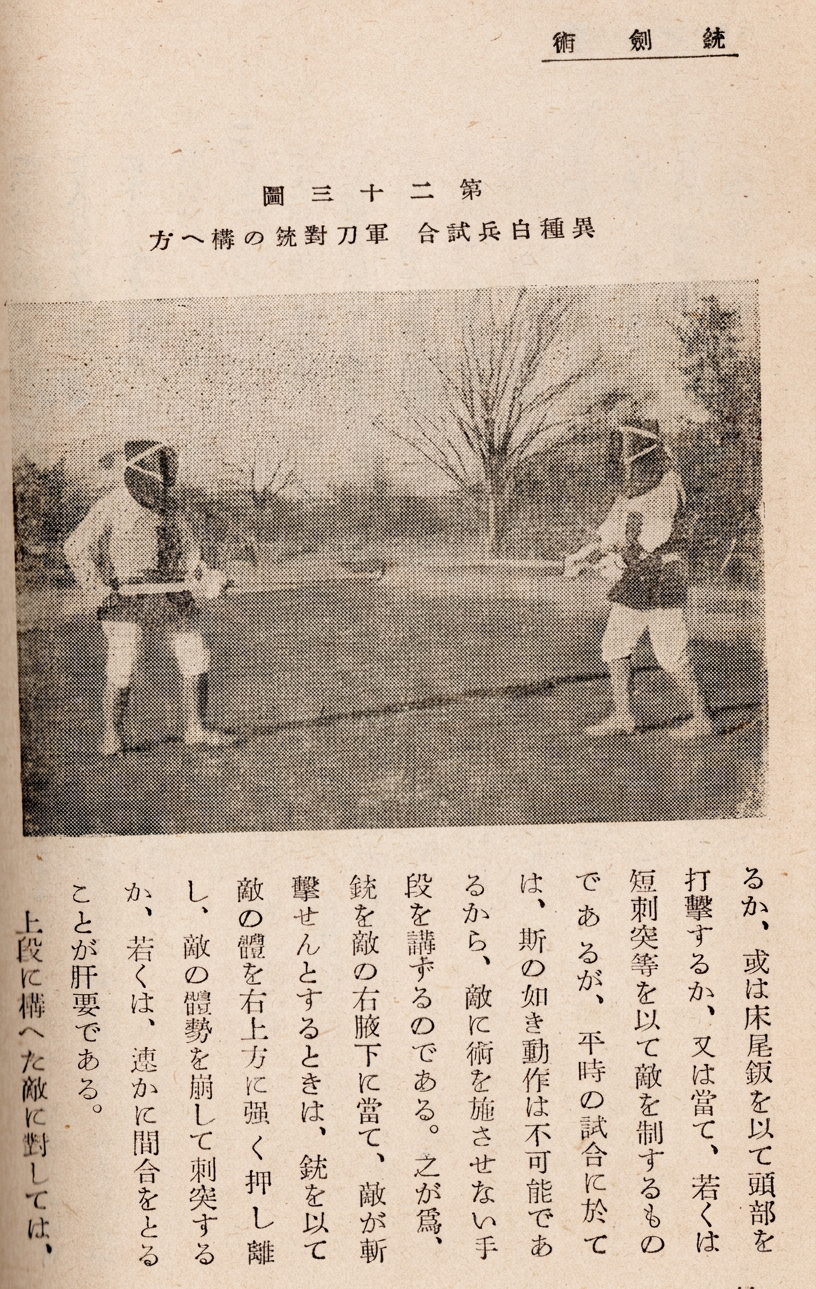
The book’s structure is what makes it valuable: it is not a technique catalogue but an instructor’s methodology handbook. Meaning and purpose; theory versus practice; education divisions; the instructor’s conscience and preparation; training grounds, formations and safety; posture and footing; continuous thrusts; applied exercises (thrust-counter combinations, thrusting against an opponent who seizes the initiative, body-turning, close fighting); competition practice (試合敎習); mixed-weapon matches (異種白兵試合) and exercises with the service rifle; night fighting (夜間剣術); refereeing; equipment; model lesson plans. A complete didactic system: fundamentals → linked thrusts → application → competition.
Tomiki in Manchuria
Why does this matter for Tomiki Aikido research? Because in exactly those years, Kenji Tomiki was in Manchuria.
In 1936 he left for the Daidō Gakuin in Shinkyō (Changchun), carrying Kanō Jigorō’s famous parting question: “Techniques like the ones you do with Ueshiba-san are necessary. But how do you train that? That is the problem. That is difficult.” From 1938 to 1945 he taught aikibudō as a compulsory subject at Kenkoku University in Changchun, and he also gave daily lessons to the Kempeitai — the military police whose school published the 1943 manual Taijutsu Kyōjo, to which both Ueshiba Morihei and Tomiki contributed. And in the same year as Eguchi’s book, 1942, Tomiki published his own “Systematic Study of Techniques in the Separated Position (離隔態勢) in Judo”, his first full systematisation of atemi-waza and kansetsu-waza — the techniques too dangerous for ordinary randori.
Three parallels
- Mass education as a rational project. Both Eguchi and Tomiki answered the same question: how do you make a combat discipline teachable to large groups, reproducibly? Eguchi solved it for the bayonet with a graded method from posture to competition. Tomiki, at Kenkoku University, converted aikibudō from “irrationalism” (transmitted experience) to “rationalism” (an analysable system) — his own words.
- 異種白兵 — mixed-weapon combat. Eguchi devotes a chapter to matches between different weapons. The Kempeitai manual of 1943 contains precisely this category, 異種白兵: bayonet against sword (articles 290-293). The mechanism is a mirror image: the swordsman invites the bayonet thrust with ki-sei, seizes the initiative (“control the spark before it ignites,” 機先ヲ制ス), pivots, smothers the rifle and throws. Eguchi’s applied exercises train the bayonet fighter to do exactly that: take sen, counter-thrust (返突), dominate the opponent’s moment of initiation.
- Distance, initiative and sen. Eguchi’s chapter title “in swordsmanship there is no defensive spirit” is the classic kōbō ichinyo (attack and defence as one). Tomiki built his judo principles on the same pillars: shizentai, maai, and above all sen. The Kempeitai manual defines aiki training as learning to “recognise and create the opportunity (kikai)” — the very idea Tomiki would formalise after the war in Judo Taiso (1954): technique organised around tsukuri and kake.
Conclusion
The bayonet manual shows that Tomiki’s Manchuria-era project was no isolated obsession. Across wartime Japanese budō — from the Toyama School’s bayonet method to Tomiki’s aikibudō curriculum — ran one shared drive: to make combat training rational, scalable and testable. Jūkendō was declared a martial art of the whole nation; the didactic logic behind it survived the war and re-emerged, transformed, in the kata and randori structures of postwar Tomiki Aikido.
Sources
OCR scan of 銃剣道 (Eguchi, 1942): prefaces by Inoue Kikutarō and Itō Seiji; introduction and table of contents (project library).
Tomiki’s Manchuria years, Kanō’s 1936 parting words, the 1942 “separated position” study, and the postwar line to Judo Taiso and the “second randori method”: see the Tomiki Aikido knowledge base.
Kempeitai manual Taijutsu Kyōjo (1943, Army Military Police School; contributions by Ueshiba and Tomiki), incl. the translated “Aiki Training” chapter (art. 273-293) and the bayonet-versus-sword section 異種白兵 (art. 290-293): Tomiki Aikido knowledge base.
Note: the manual’s scan is severely corrupted; some names, page numbers and table-of-contents entries remain uncertain. The wartime rhetoric of 1942 is presented strictly as source material.

