Kenji Tomiki schreef 2 verschillende boeken over zelfverdediging: Kodokan Goshin-jutsu (1958) en Inleiding to Goshin-jutsu (1974)
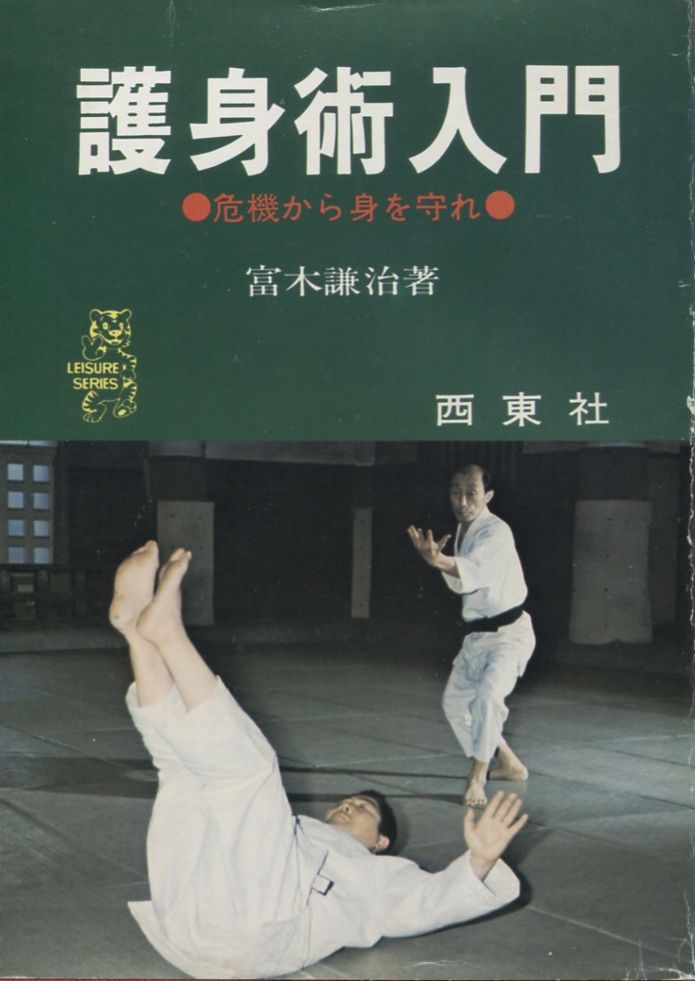
Kenji Tomiki’s Goshin Jutsu (護身術)
- Titel: Introduction to Goshinjutsu (護身術入門)
- Publicatiejaren:
- 1956: Kodokan Goshin Jutsu (講道館護身術) werd ontwikkeld door een commissie van het Kodokan Judo Institute, waarbij Kenji Tomiki een sleutelrol speelde. Dit was een kata (vorm) voor zelfverdediging in Judo, geïnspireerd door Aikido-principes. De eerste openbare demonstratie vond plaats tijdens de Kagami Biraki in 1956 in het Nippon Budokan.
- 1958: Tomiki publiceerde het boek Kodokan Goshin-jutsu, dat diende als het belangrijkste werk over de Kodokan Goshin Jutsu Judo kataen.wikipedia.org.
- 1974: Tomiki publiceerde “Introduction to Goshinjutsu” (護身術入門), een boek dat dieper inging op zelfverdedigingstechnieken gebaseerd op Aikido fundamenten.
Opmerkingen:
- Het Kodokan Goshin Jutsu is een officiële kata in Judo, bestaande uit 21 technieken voor zelfverdediging, waaronder verdediging tegen ongewapende aanvallen, messen, stokken en vuurwapens.
- Tomiki’s bijdrage aan deze kata was baanbrekend, omdat hij Aikido-principes integreerde in Judo, wat resulteerde in een unieke benadering van zelfverdediging
The Meaning of Self-Defense
“Self-defense” means not only protecting oneself from unlawful violence but also ensuring one’s safety against other dangers.
Various dangers surround us in our daily lives. Traffic accidents, environmental hazards, natural disasters like earthquakes and typhoons, and even illness – these calamities can occur anywhere at any time.
If we face a life-threatening crisis, we must either immediately escape from it or control it. However, this is impossible unless we have thoroughly learned and embodied these principles and techniques beforehand.
This book presents a new training system that makes basic techniques selected from Aiki Jujutsu (now known as Aikido) accessible to anyone through numerous sequential photographs. It aims to develop healthy and agile physical fitness while providing self-defense and personal development for daily life. If this book can contribute to safe living and health promotion, it will fulfill the author’s deepest wish.
In compiling this book, I received assistance from Mr. Hideo Oba (6th dan in Judo, 8th dan in Aikido), lecturer at Waseda University, and Ms. Tsunako Miyake (5th dan in Judo, 5th dan in Aikido), lecturer at Japan Physical Education University. I express my gratitude to them here.
The Author: Kenji Tomiki
Comment: This text appears in Tomiki’s 1958 book “Aikido Nyumon” but not in “Judo Taiso” (1954). It shows how Tomiki’s focus expanded from pure technical instruction in Judo Taiso to include more practical self-defense applications in Aikido Nyumon. The reference to Aiki Jujutsu as “now known as Aikido” reflects the transitional period when the art was being modernized.
Control Techniques – Actively Neutralizing the Opponent’s Attack
Control Techniques When Grabbed
As mentioned in the previous chapter, an opponent’s attack can take various forms: they may grab you and attempt to throw, choke, or pin you down, or they may attack from a distance using strikes, thrusts, kicks, or even various weapons.
In this chapter, we focus primarily on techniques for when an opponent grabs you. With sufficient practice, you can also apply these techniques defensively against distant attacks. However, to effectively practice and master techniques for controlling strikes, thrusts, kicks, or weapon-based attacks (such as slashes or stabs), you must follow the structured training system of “Aiki Randori-ho” (合気乱取り法). Through thorough training in Aiki Randori-ho, you can even engage in matches like “empty-handed vs. short sword (rubber knife)” in Aikido competitions.
The control techniques discussed here are applied the moment an opponent grabs you, utilizing their momentum against them. However, before practicing these control techniques, you must first master the “detachment methods” (離脱法) covered in the previous chapter.
The control techniques consist of three main categories:
- Atemi-waza (当て身技, Striking Techniques) – Applying force to the opponent’s face (chin, forehead) to make them fall.
- Hiji-waza (ひじ技, Elbow Techniques) – Applying force to the opponent’s elbow joints to make them fall or submit.
- Kote-waza (手首技, Wrist Techniques) – Applying force to the opponent’s wrist joints to make them fall or submit.
Each of these techniques is physiologically and mechanically refined, targeting the human body’s weak points with precision and effectiveness.
Safety and Misconceptions
Techniques like Atemi-waza and joint locks are often considered dangerous, with a risk of injuring the opponent. However, this is a misconception. With proper training and rational practice, these techniques pose no danger. From a physical education perspective, practicing these techniques enhances flexibility, agility, and joint mobility, contributing to overall health and fitness.
Historical Context of Atemi and Joint Techniques
To understand the nature of Atemi-waza and joint techniques, let’s briefly explore the history of Jūjutsu. Jūjutsu originated during Japan’s Sengoku period (Warring States period), evolving from battlefield grappling techniques used by samurai. During the peaceful Edo period, it adapted into a system of unarmed combat techniques suitable for civilian clothing, leading to significant advancements.
While Jūjutsu is fundamentally an unarmed martial art, opponents were not always unarmed. Given the lifestyle and duties of samurai at the time, they often faced armed opponents while themselves being unarmed. Thus, the techniques for defeating and controlling an armed opponent with bare hands became a defining characteristic of Atemi-waza and joint locks. These techniques can be seen as a practical exploration of the ideal of “Muto-dori” (無刀取り, “taking the sword without a sword”), a principle famously associated with the Yagyū Shinkage-ryū school of swordsmanship.
The Philosophy of Japanese Martial Arts
Japanese martial arts have long been described as “the martial arts of harmony (和の武道)” or “the path of non-killing (不殺の道)”. This philosophy emphasizes not responding to violence with violence and avoiding the indiscriminate use of lethal techniques. The spirit of Jūjutsu exemplifies this principle.
*********
The expression “無刀取り” (Mutō-dori) is a term from Japanese martial arts. It translates literally to “taking (or disarming) without a sword” or “empty-handed disarmament.”
Meaning and Context:
- “無刀” (Mutō) means “without a sword” or “unarmed.”
- “取り” (Dori or Tori) means “taking,” “grabbing,” or “disarming.”
In martial arts, Mutō-dori refers to techniques or principles for defending against an armed opponent (such as someone with a sword, knife, or other weapon) while being unarmed yourself. It emphasizes:
- Evasion and Movement: Using body movement, footwork, and timing to avoid the weapon’s reach.
- Control and Disarmament: Gaining control of the attacker’s body or weapon to neutralize the threat.
- Psychological and Strategic Advantage: Using the attacker’s momentum, intention, or hesitation against them.

